Which Emerging Adult Is Most Likely to Want to Live in the Nest to Help Her Family?
People Who Have "Too Many Interests" Are More Likely To Exist Successful According To Inquiry
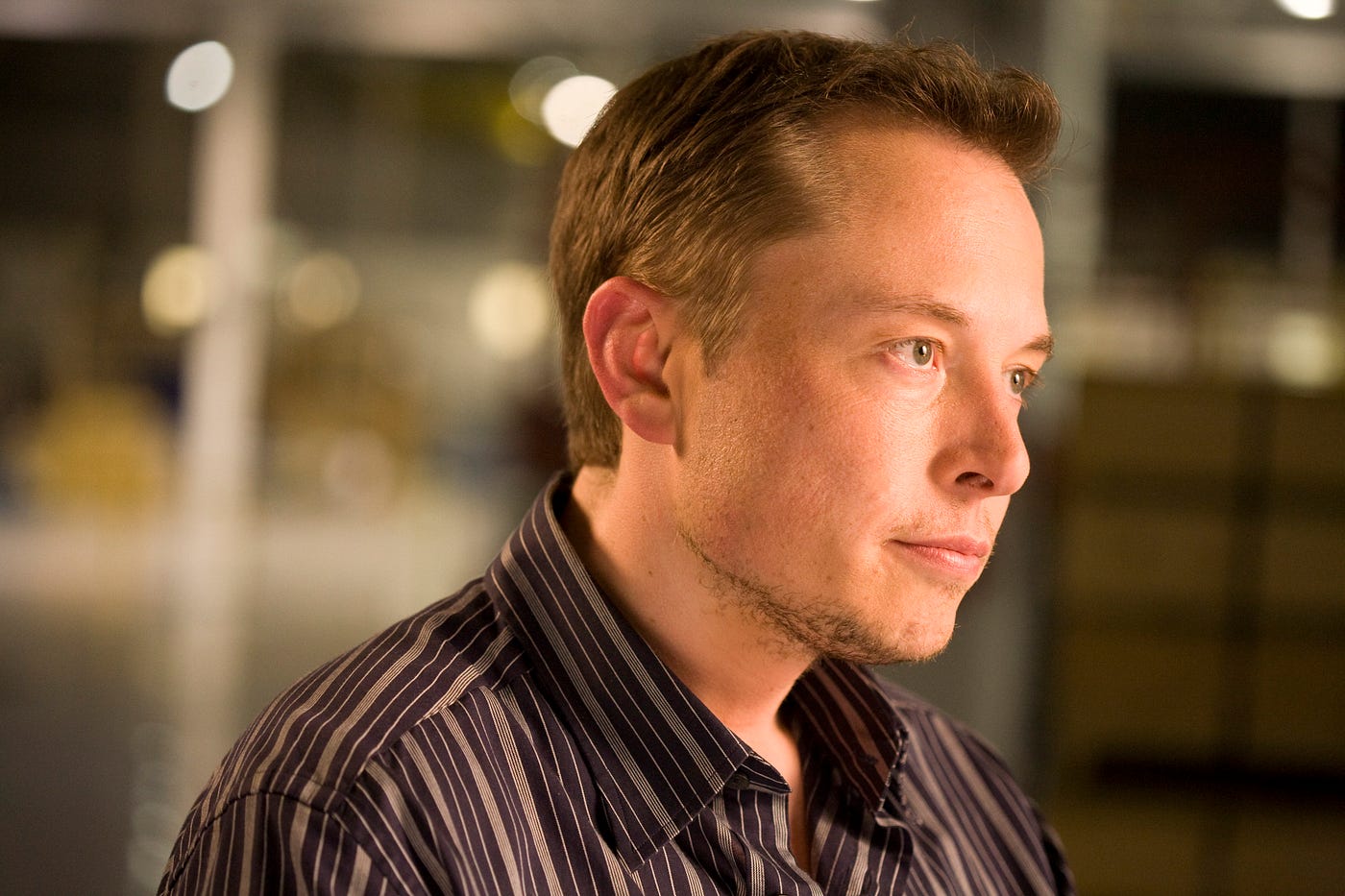
The nigh comprehensive example that has ever been fabricated for why nearly everyone should become a polymath in a modern cognition economic system.
"Jack of all trades, main of none."
The warning against existence a generalist has persisted for hundreds of years in dozens of languages. "Equipped with knives all over, yet none is sharp," warn people in China. In Estonia, information technology goes, "Nine trades, the tenth one — hunger."
Yet, many of the near impactful individuals, both gimmicky and historical, have been generalists: Elon Musk, Steve Jobs, Richard Feynman, Ben Franklin, Thomas Edison, Leonardo Da Vinci, and Marie Curie to proper name just a few.
What's going on here?
If being a generalist was the path to mediocrity, why did the well-nigh comprehensive study of the nearly significant scientists in all of history uncover that 15 of the 20 were polymaths? Newton. Galileo. Aristotle. Kepler. Descartes. Huygens. Laplace. Faraday. Pasteur. Ptolemy. Hooke. Leibniz. Euler. Darwin. Maxwell — all polymaths.
If being a generalist was so ineffective, why are the founders of the five largest companies in the globe — Nib Gates, Steve Jobs, Warren Buffett, Larry Page, and Jeff Bezos — all polymaths (who as well follow the 5-hour rule)? Are these legends but genius anomalies? Or are they people we could and should imitate in social club to be successful in a modern knowledge economy?
If existence a generalist is an ineffective career path, why do 10+ academic studies observe a correlation betwixt the number of interests/competencies someone develops and their creative impact?
The Era of the Modern Polymath
"The future belongs to the integrators." — Educator Ernest Boyer
I define a mod polymath as someone who becomes competent in at to the lowest degree three diverse domains and integrates them into a top 1-percent skill prepare.
In other words, they bring the best of what humanity has discovered from beyond fields to assistance them exist more effective in their core field. Hence the T-shape beneath. Specialists, on the other paw, just focus on knowledge from their ain field
Since Malcolm Gladwell's book, Outliers, popularized the concept, many now believe that to become world-grade in a skill, they must complete 10,000 hours of deliberate exercise in order to beat out the contest, going as deep every bit possible into one field. Modern polymaths go against the grain of this popular advice, building singular combinations of skills and cognition across fields and and then integrating them to create breakthrough ideas and even brand new fields and industries where there is piffling contest.
For instance, people have studied biology and sociology for hundreds of years. But no ane had ever studied them together and synthesized them into a new discipline until researcher EO Wilson pioneered the field of sociobiology in the 1970s. We also have modernistic tech heroes like Steve Jobs (who I write near here) who famously combined design with hardware and software.

Elon Musk (who I write about here) has combined an agreement of physics, engineering, programming, design, manufacturing, and business to create several multibillion-dollar companies in completely dissimilar fields. He not merely makes atypical combinations of skills, he too makes atypical combinations of personality traits.
Charles Darwin, creator of one of the most important theories in history — the theory of evolution — was a polymath too. Steven Johnson, writer of Where Good Ideas Come From (ane of my top five favorite books of all-time), brilliantly describes Darwin's showtime scientific breakthrough:
The idea itself drew on a coffeehouse of unlike disciplines: to solve the mystery, he had to call back like a naturalist, a marine biologist, and a geologist all at once. He had to empathise the life cycle of coral colonies, and observe the tiny evidence of organic sculpture on the rocks of the Keeling Islands; he had to think on the immense time scales of volcanic mountains rising and falling into the sea… To sympathize the idea in its full complexity required a kind of probing intelligence, willing to recall beyond those different disciplines and scales.
A more everyday example is my longtime friend Elizabeth Saunders. Elizabeth combined her passions for writing, Christianity, and time direction into a thriving coaching business based on principles of Christianity that she promotes through books and manufactures. There is a whole cottage industry effectually fourth dimension direction, but in that location are almost no resources on divine time direction.
In order to become an effective online writer, I've deliberately combined academic enquiry, digital journalism, and growth hacking into one skillset. I didn't go to college for any of these skills, but practiced them over time and received coaching on them. My observation is that academics often look down on journalists; journalists look down on marketers; and marketers wait downward on journalists and academics. What many neglect to run across is that each brings something valuable to the table and that all of these skills combined pb to great ideas seen by big audiences.
Why Existence A Modernistic Polymath Is The New Normal
"Study the science of art. Study the fine art of science. Develop your senses — especially learn how to see. Realize that everything connects to everything else."
— Leonardo Da Vinci
Polymaths take existed forever — indeed they are often the ones who've advanced Western culture more any others — but they've been called different things throughout history. This timeline shows the development over time.
Only is this a recipe that nearly people should follow?
There are several significant changes trending in our cognition economy correct now, which are flipping the conventional wisdom on the value of specialization on its head. In today's globe, diverse interests are not a curse, they're a blessing. Being a polymath instead of a specialist is an advantage, not a weakness.
People who dearest learning across fields tin can use that tendency to be more than financially successful and impactful in their career.
What follows is the most comprehensive case for becoming a polymath that has ever been created to my knowledge. Then, at the end of the commodity, I share a resource with you that will help you become a successful polymath.
Polymath Advantage 1: Creating an atypical combination of 2 or more skills that you're merely competent can lead to a world-class skill set.
Scott Adams, the creator of Dilbert, one of the most popular comic strips of all time, wasn't the funniest person in the world. He wasn't the best cartoonist in the world, and he wasn't the most experienced employee (he was merely in his 20s when he started Dilbert). But by combining his sense of humour and illustration skills while focusing on business civilisation, he became the best in the earth in his niche. In an insightful weblog post, he nails how he did it and how yous tin can too:
If yous want something extraordinary [in life], y'all have 2 paths:
1. Become the all-time at 1 specific thing.
ii. Become very expert (superlative 25%) at ii or more things.The starting time strategy is difficult to the point of near impossibility. Few people volition ever play in the NBA or make a platinum album. I don't recommend anyone even try.
The 2d strategy is fairly easy. Anybody has at least a few areas in which they could be in the top 25% with some effort. In my case, I can describe improve than most people, simply I'm inappreciably an artist. And I'm not whatsoever funnier than the average standup comedian who never makes it big, only I'1000 funnier than most people. The magic is that few people can draw well and write jokes. It's the combination of the two that makes what I do so rare. And when you add together in my business background, suddenly I had a topic that few cartoonists could hope to sympathise without living it.
Polymath Reward 2: Well-nigh artistic breakthroughs come via making atypical combinations of skills.
We tin see the power of atypical combinations when we wait back at the virtually influential papers throughout the history of science. Researcher Brian Uzzi, a professor at the Northwestern University Kellogg Schoolhouse of Management, analyzed more than 26 million scientific papers going back hundreds of years and found that the nigh impactful papers often have teams with atypical combinations of backgrounds. In another comprehensive study performed by Uzzi, he compared the results of academic papers past the number of citations they received and the other papers they cited. A fascinating blueprint emerged. The top performing studies cited singular combinations of other studies (90 percent conventional citations from their own field and 10 percent from other fields).
Polymath Advantage 3: It'southward easier and faster than ever to go competent in a new skill.
Want to larn a new, valuable skill to add together to your toolbox? Information technology's never been easier:
- The quality of knowledge in every domain is improving. Researchers and practitioners are systematically improving and testing every field of knowledge to make information technology more robust. Cumulatively, old fallacious ideas are being discredited and new ideas are being added. The technology field is smarter than information technology was 20 years agone, for example. And so are the fields of physics and biology.
- Second, there is an abundance of free or affordable content from the world's acme experts in every medium you tin can think of. Need a community and expert coaching? In that location are now hundreds of thousands of online courses and billions of online videos. This is the gold era for people who value learning, are willing to invest in themselves, and who are disciplined enough to have action on their own.
My favorite example of high-quality, easy-to-access noesis is a 12-twelvemonth-old girl named Adilyn Malcolm, who learned how to dubstep dance in a matter of months by constantly watching short clips of others online, practicing, and repeating until she mastered each segment and could perform an entire dance flawlessly.
Imagine Adilyn trying to learn how dubstep before Youtube. There probably wouldn't take been a local trip the light fantastic studio that specialized in dubstep. If 1 did, the teacher probable would not have been world-class. Adjacent, Adilyn wouldn't have been able to obsessively spend hours learning about it. If any dubstep videos did be, she would've had to convince her parents to spend $20 a piece on them. YouTube, on the other hand, provided Adilyn with a chance to learn from many world-course teachers and performers at no cost and on her own schedule. Today, a search on Youtube for "learn dubstep" returns over ane one thousand thousand results!
And if that'southward not impressive plenty, consider xiii-twelvemonth-erstwhile Michael Sayman. He taught himself how to lawmaking via Google. One of his mobile games became i of the peak 100 apps in the world, beating out Starbucks and Yelp. Or sentry eleven-year-former Amira Willighagen masterfully sing opera later on teaching herself with YouTube videos for four years. Something large is happening here, and these young prodigies are the harbingers of it.
As Isaac Newton famously proclaimed, "If I have seen further it is by standing on the shoulders of giants." In today's era, we take more shoulders to stand on than ever.
Polymath Reward iv: Information technology's easier than ever to pioneer a new field, manufacture, or skill set.
While the explosion of cognition is making it impossible or at to the lowest degree more difficult for anyone to know everything, it has too made information technology easier to discover i big, atypical combination of fields or skills. Information technology's easier than ever to be a polymath.
Hither'due south why:
First, i of the main means that new skill sets, industries, and fields emerge is by combining them with old ones:
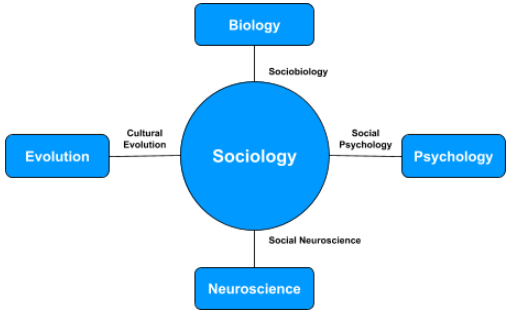
2d, the number of new bookish fields and business organization industries is increasing exponentially.
And finally, as the number of new skills increases, the number of possible combinations increases exponentially. Every new clamper of knowledge can theoretically be combined with every other cognition chunk. Every new breakthrough creates the potential for exponentially more than breakthroughs.
If you have one building cake (A), you tin can only make one combination (A). If yous accept two (A & B), so you lot can brand three combinations (A, B, A+B). In one case you go to four building blocks, you go to 15 possible combinations, and the numbers grow dramatically from there. At present consider that there are thousands and thousands of disciplines, industries, and skills. Each new one creates the potential for tens of thousands more.
Below are a few of the many thousands of fields that were created very recently through combination:
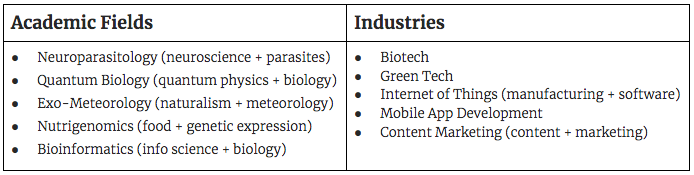
Lesser line: when I was in high school, I remember reading how a immature Leonardo Da Vinci was frustrated that he was built-in in a menses where everything worth being discovered had already been discovered. This quote stuck with me, considering it was written by one of the greatest inventors in human history. It's helpful for us to remember Da Vinci's quote, considering information technology's just as true today. Almost ALL of the potential discovery that humanity will do is in the futurity.
Polymath Advantage v: Information technology future-proofs Your career.
"It is non the strongest or the most intelligent who volition survive but those who can all-time manage change." -Charles Darwin
What do the following six professions have in common?
- App developer
- Social media manager
- Driverless car engineer
- Deject computing specialist
- Large data scientist
- YouTube content creator
Respond: None of them existed 15 years ago. Imagine the power you'd take if you could go dorsum in time, master these skills, and then be one of the best in the world at them when they striking big? We actually don't have to guess. You lot'd stand a good chance of being a millionaire. The headline beneath shows just how valuable a driverless motorcar engineer is.
So what skills are going to be valuable in twenty years? Do you know?
No? Neither do I. Neither does anybody.
So the question arises, how do we make investments in knowledge now that will pay off far into the time to come?
I'd make the case that a polymath is much better positioned than a specialist. A polymath tin accept the skills that she or he has learned and combine them in new ways quickly to master new fields. On the other manus, a specialist whose fields becomes obsolete would probable take much more time to adapt to the alter and have to starting time back at the offset.
In an environment of accelerating alter, nosotros're going to have to go polymaths to survive. We're going to take a dozen careers. Each one is going to require new skills.
Polymath Advantage vi: It sets yous up to solve more complex problems.
Many of the largest issues that face up society and individuals benefit from solutions that integrate multiple disciplines.
Let'south take obesity every bit an case. Equally the chart below shows, nutrition and obesity business relationship for 4 out of the tiptop fifteen causes of death in the U.s.a.. Millions of deaths that are completely preventable.
From the outside, you could easily say that solving the obesity crisis is an easy problem. Just eat less and practise more. Correct? Non quite.
The nautical chart beneath from the Diversity Bonus book by researcher Scott Page shows a portion of simply how complex the obesity epidemic is. As y'all can meet, many different fields are needed to solve this problem: exercise physiology, genetics, behavioral psychology, sociology, economics, marketing, general psychology, education system, nutrition.
Polymath Advantage seven: It helps you stand out and compete in the global economic system.
I of the near cardinal mental models from economic science is supply and need (meet more valuable mental models). It'due south relevant to the job market place, to goods and services, to the world of ideas, and to many other places.
In this model, there are two means to increment how much of a price premium y'all control:
- Decrease the supply (motion the blue curve to the left).
- Increase the demand (move the cerise curve to the correct).
You tin can have the most valuable skill ready in the world, but if everyone besides has that skill set, and then y'all're a commodity. Past becoming a polymath and developing a unique skill ready that few others take, then you'll exist able to differentiate yourself and charge more.
Desire a quick examination to come across if you accept rare and valuable knowledge? Then ask yourself the same question that cocky-made billionaire Peter Thiel, one of the top investors in Silicon Valley, asks candidates he might rent and founders he might fund, "What'southward the one matter y'all believe is truthful that no one else agrees with you on?" This simple question very chop-chop tells you whether or not yous have rare and valuable ideas. If you lot can't come up with annihilation, information technology tells you that y'all might not be equally an original thinker as thought y'all were.
This mental model is widely shared among the world's meridian investors and performers as the post-obit quotes demonstrate:
"You desire to be greedy when others are fearful. You want to be fearful when others are greedy. It's that uncomplicated." — Warren Buffett, founder of Berkshire Hathaway
"In order to become into the top of the performance distribution, you have to escape from the crowd." — Howard Marks, founder of Oaktree Capital ($2+ billion cyberspace worth)
"You tin can't make coin agreeing with the consensus view." — Ray Dalio, founder of Bridgewater Associates (largest hedge fund in the world)
"The best projects are likely to be disregarded, not trumpeted by a crowd; the best problems to work on are often the ones nobody else fifty-fifty tries to solve." — Peter Thiel, founder of PayPal and billionaire investor ($3.3 billion net worth)
"You have to be odd to be number one." -Dr. Seuss
The weakness of an fine art is its dogma. And when I'g competing against an individual from a different subject area, I try to find the dogma of that discipline. When I'm competing with someone within a subject field, I try to find their personal dogma. — Josh Waitzkin, Chess Grandmaster & World Tai Chi Champion
Bottom Line: Brand Yourself Anti-Fragile
Being a polymath will exist the new normal, and polymaths who synthesize diverse skills to create breakthrough innovations and solve complex problems will accept a huge touch. Generalists who neglect to synthesize their knowledge into value for others stand to flounder in their career, perhaps having an impressive encyclopedic noesis, merely no real touch on.
Meanwhile, specialists risk getting trapped past their success. They build upward a narrow skill set and reputation and become highly paid for it. Merely their careers are fragile. As their professions disappear or evolve, information technology becomes almost impossible to switch without having to start over.
Polymaths, on the other hand, are what Nassim Taleb calls "anti-frail." Changes to the environment make them stronger. As new paradigms of business emerge or their passions abound, they can speedily combine their existing skill sets in a myriad of ways.
Now that you come across how important information technology is to become a modern polymath, the side by side logical question is: how?
I created a resource to help you with just that…
How To Get a Mod Polymath
"The greatest scientists are artists as well." — Einstein
The idea of becoming a modern polymath can be overwhelming. Where practise you start? What field do you lot learn first? How exercise you find the time? How practice you translate what you learn into real world value?"
When I offset started learning across fields, I stumbled. I call up, for example, picking up textbook on biology, which I hadn't studied since high school, and trying to utilise it to my life. Information technology was boring and not that useful. In other words, I picked the wrong discipline (for me) to start with, and I used the wrong method to larn it. After a lot of trial and error, I learned techniques that make going across fields faster and easier
During the hundreds of hours I've spent researching how to exist a polymath and interviewing polymaths, ane key that I've discovered is mental models.
First, mental models transcend disciplines. They are the invisible links that connect disciplines together:

For instance, one time yous acquire the "80/20 Dominion," which states that, in many domains, 20 pct of your efforts produce eighty percent of your results, you can use this mental model to improve efficiency and impact in every area of your life as well as every field you study forever. You can identify the twenty% of relationships that crusade fourscore% of your feeling of connection. You lot can place the 20% of clients that create eighty% of your business. Y'all can identify the 20% of tasks that create lxxx% of your productivity. And so on!
Furthermore, mental models help you learn multiple skills much more quickly, because they gave your a stable base of useful and universal noesis that you can use for the rest of your life. Therefore, when you become into any new field of study, even though yous may not have direct experience with that field, you'll quickly notice mental models yous can utilize.
In short, mental models are primal to becoming a improve polymath.
In our Mental Model Of The Month Club, we delve into a different mental model every calendar month that will aid you get a polymath. We too prove you how to combine those models to make better decisions and have creative breakthroughs. By joining, yous immediately receive our all-time Mastery Transmission.
Access our best Mastery Manual in the adjacent few minutes >>
If you're just learning almost mental models for the first time, my costless e-mail form will help yous get started. My team and I accept spent dozens of hours creating it. Inside, you'll learn the models that these billionaires use to make business concern and investing decisions — tools you tin can apply immediately to your life and business organisation. Y'all'll also learn how to naturally use these models in your everyday life.
Sign up for the free mini-course hither >>
* * *
Special thank you to my partner in the Mental Model Of The Month Society, Eben Infidel, for sharing dozens of conversations on this topic over the past 2 years. Many of the ideas in this article are a result of those conversations.
* * *
This article is part of a series of articles on Learning How To Learn that I've written over the past 2 years. Becoming a polymath is but i of many approaches to learning faster and more finer which I share. You can watch my webinar that summarizes some of the biggest principles by post-obit the link beneath...
Sign upwardly for the costless Learning How To Learn webinar here >>
This article was written with dear and care using the blockbuster mental model .
If there's a link to an Amazon volume, it's an chapter link, which ways I go a pocket-sized amount of compensation when you buy the book. This compensation does non influence the specific books I recommend, as I only recommend books that I read and honey.
Source: https://medium.com/accelerated-intelligence/modern-polymath-81f882ce52db
0 Response to "Which Emerging Adult Is Most Likely to Want to Live in the Nest to Help Her Family?"
Post a Comment